In the services' words

Is an online video call safe? Beliefs set against the facts

Is an online video call safe? Not entirely, and two services say so themselves: Nightcap's FAQ warns that automated checks can miss unsafe content, while Chamet says its tools cannot remove every risk.

A rules page and 18+ confirmation, then the chat window; the browser requests camera and mic.

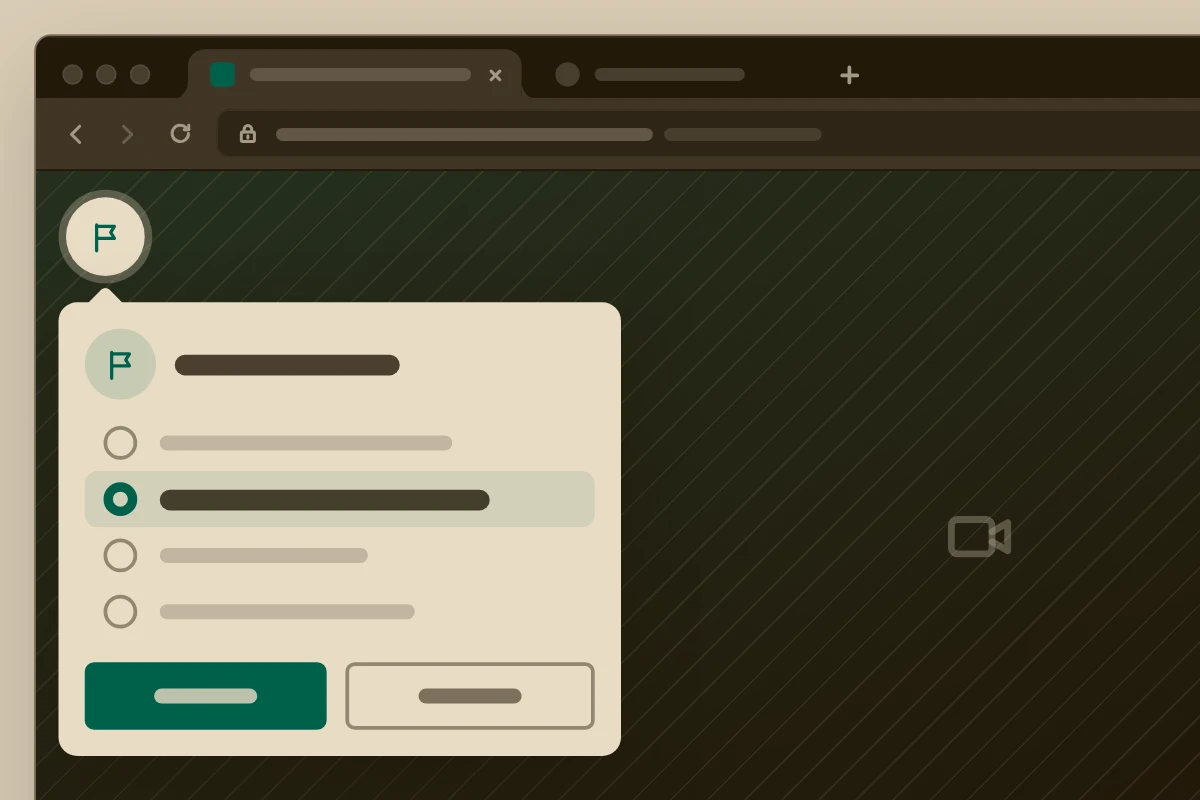
A report window listing reasons to choose from: pick the reason that matches what happened on screen. Drawn example, not a screen capture
Mockup of a report form with a list of reasons in a dark browser

Where claims end

Every service in the site's fact table publishes something about safety, from AI screening to a safety hub, and eight of the ten mention a way to report a caller. Each statement is the service's own, taken from its pages, and none has been audited. Several popular beliefs about safety do not survive a close reading of those statements.

Automated screening does not see everything

Software carries much of the watching on several services. Monkey describes AI that watches live video chat as it happens, and Hay advertises AI moderation alongside spam protection. Nightcap applies automated checks to text as well as video in real time.

No figures on how often any of this software errs appear in the record. Automated checks are a filter, not a guarantee, and software alone does not make an online video call safe.

The rules differ from one service to the next

What counts as a breach is set by each service. Chatroulette prohibits sexually suggestive content outright. OpenTalk's in-chat rules bar nudity, hate speech and harassment and expect the camera to be live, while Random VideoChat bans harassment, hate speech, nudity and any content involving minors.

The lists do not match. Behaviour tolerated on one service can therefore be a reportable breach on another. The rules page of the service actually in use is the reference that counts.

Does a report get an account banned?

Only according to the services themselves, and only for confirmed breaches. Chatroulette says a human on its round-the-clock trust and safety team reviews each report, and confirmed violations bring an immediate ban. Random VideoChat describes warnings, suspensions and permanent bans, and OpenTalk states that breaking its rules leads to a ban.

Monkey's safety pages mention a weekly enforcement report, the only regular tally of that kind in the record. For Monkey and OpenTalk, an in-call report control is not confirmed; where the other services place theirs is covered in the main guide's round-up of report buttons.

What a verified badge covers

Chamet shows a "100% Verified" badge and describes verification features, yet its page does not say what the check involves. Badges are claims too. A badge suggests that some check took place at some point. It cannot vouch for what a caller will do on camera, so reporting and leaving remain the working tools.

Badges and moderation aside, the choice between services often comes down to the device in hand, which the guide to choosing a service by device takes step by step.

When a recording is used as a threat

Stop replying. Keep the messages and the account name, and report the account on the service where the call took place. For adults in the UK, the SWGfL helpline for intimate image abuse handles webcam blackmail and helps with reporting and removing content. It cannot help under-18s or anyone outside the UK.

The helpline answers on 0345 6000 459 from 10:00 to 16:00 on weekdays, excluding bank holidays, and currently works by email only on Fridays. Where the images show someone under 18, the routes set out in the site's 18+ statement apply instead.

Money lost to a scam on a call can be reported to Report Fraud, the police reporting service for England, Wales and Northern Ireland, on 0300 123 2040. The Cyber Helpline gives free, confidential help from cyber security volunteers to people in the UK affected by online harm, sextortion included.
Before, during and after a call

Before a call

Before a call

During a call

During a call

During a call

After a call

After a call

After a call

Terms used above

AI moderation
Software that scans live video, text or both for rule breaking, as several services in the table describe their own checks.
Enforcement report
A regular public count of the actions a service has taken against accounts that broke its rules, such as warnings, suspensions and bans.
Intimate image abuse
Sharing intimate pictures or footage of someone without consent, or threatening to; the SWGfL helpline also treats voyeurism and webcam blackmail as forms of it.
Sextortion
Blackmail that threatens to share intimate images or a recorded webcam call unless money or more images are sent.
Trust and safety team
The staff who review complaints and decide on warnings, suspensions or bans under a service's rules.